From theory to practice
The Whitman Staff Wellness Flowchart connects awareness, capacity, and a next step: a wellness practice or a tab-out.
Explore the LinkedIn post ↗Building school communities where students and adults feel safe, supported, and ready to learn.
I’m Dr. Jim Walters, a practicing K–2 Extended Resource teacher in Seattle, Washington. I connect what we know about the brain with the everyday work of supporting children and educators.
Explore the work ↗Start with the approachBehavior communicates a need. Relationships help us understand it. Supportive systems help us respond.
Applied Educational Neuroscience brings an understanding of stress, regulation, and connection into everyday educational decisions. My work begins with the people experiencing those systems—students, educators, and families.
Notice activation. Offer predictable routines, movement, and spaces to reset. Make room for readiness before increasing demands.
Listen with curiosity. Create belonging through trusted adults, student voice, and opportunities to repair and reconnect.
Translate ideas into clear routines, visual supports, and shared adult practices that fit the reality of a busy school day.
From adult wellness at Whitman Middle School to early elementary regulation supports in Seattle, Washington, the throughline is the same: build care into the daily experience of school.
Whitman Middle School
Alliance for a Healthier Generation
Whitman’s Staff Tab-Out Room gives educators a dedicated place to pause and reset. Designed by Jim Walters and maintained by the school’s wraparound team, the space makes adult wellness a visible part of school life.
In 2025, Whitman was recognized as one of America’s Healthiest Schools. The school’s announcement highlighted the Tab-Out Room as part of its innovative focus on adult wellness.
Read the school’s announcement ↗Source: Whitman Middle School · September 1, 2025“We take care of ourselves, each other, and our community.”
In my K–2 Extended Resource work, the Beehive connects regulation support with access to learning. Predictable check-ins, visual routines, planned breaks, and supported re-entry help children navigate their school day.
A child checks in, identifies a feeling or body signal, and receives support to choose a next step. Adults offer time and connection, then help the child return to learning with a clear, manageable plan.
Students rely on adults for co-regulation. A shared way to notice our own activation, seek support, and return with capacity makes care part of the system.
Explore practical guides connecting the research, everyday school practice, and tools to share with your team.
Explore the resource hub ↗The Whitman Staff Wellness Flowchart connects awareness, capacity, and a next step: a wellness practice or a tab-out.
Explore the LinkedIn post ↗A reflection on Whitman’s approach to digital wellbeing, centering student voice, connection, and agency.
Read the reflection ↗An early reflection on helping children build the skills of play—and shifting the adult role toward recess coaching.
In this 2018 piece, I asked educators to consider how changes in children’s play experiences affect what we expect at recess. The practical invitation: model play, practice together, and gradually release responsibility—“I do, we do, you do.” Recess offers a place to teach connection and participation.
Adapted from Jim Walters’s LinkedIn article export, created October 22, 2018.
Explore my video collection on YouTube: conversations, reflections, and ideas from my work in trauma-informed education.
Watch Jim’s videos ↗Videos reflect the context and research available when they were created. Current resources will provide updated references alongside relevant topics.
The original Vlogs, Resources, and Talks with Toby collections are part of this site’s ongoing archive work. Explore the YouTube channel above while individual videos are being organized for this website.
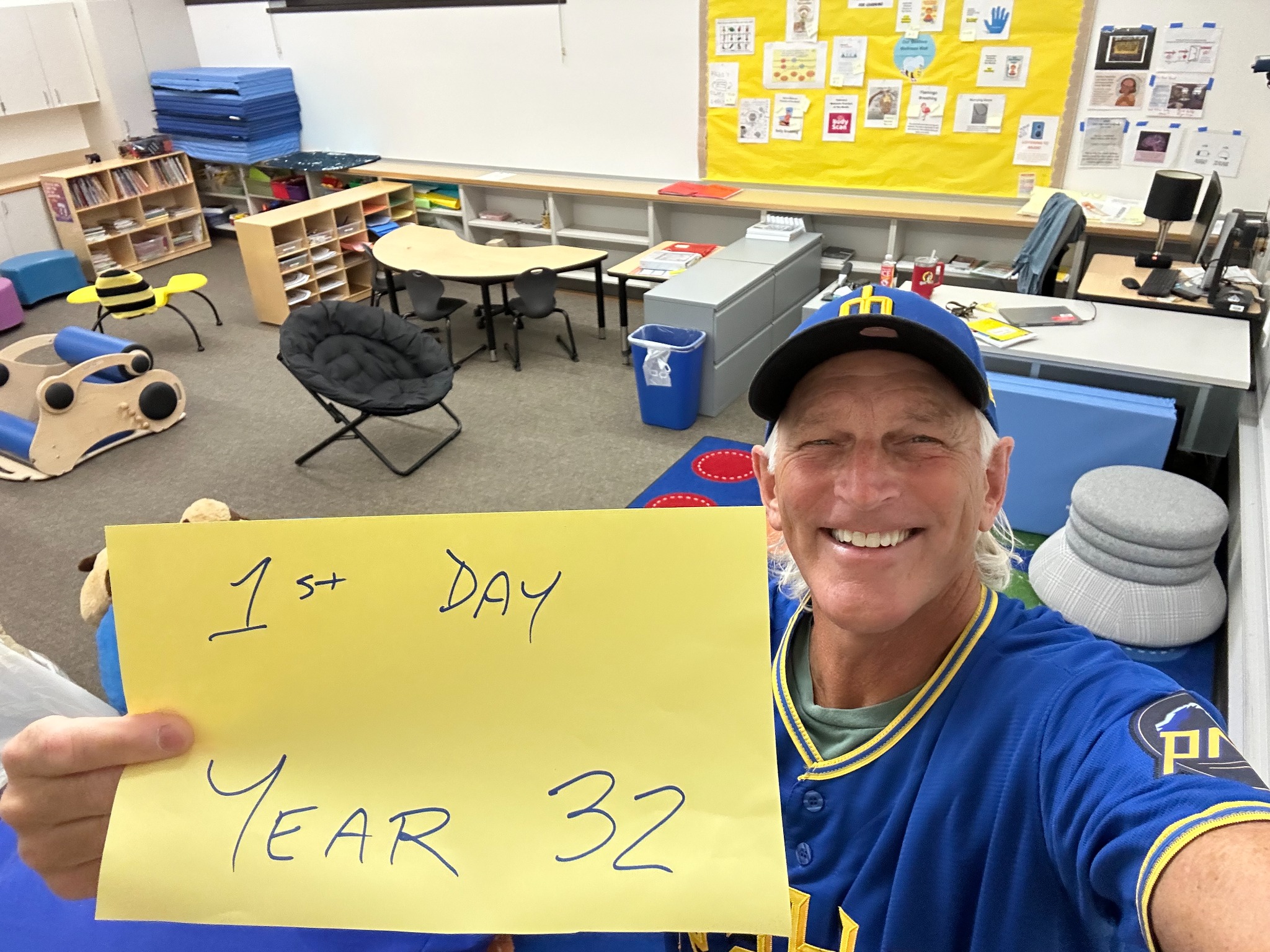
I’m Dr. Jim Walters. Across more than 30 years in education, my work has focused on creating learning environments shaped by empathy, equity, and an understanding of the nervous system.
I founded TraumaInformedLearning.com in 2017. My work through the U.S. Department of Education’s School Climate Transformation Grant (2020–2025) focused on trauma-informed school systems and community wellness. Today, I work as a K–2 Extended Resource teacher in Seattle, Washington, supporting regulation, specialized instruction, and access to classroom learning.
I believe the people closest to a challenge should help design the response. That means listening to children, supporting educators, and working alongside families.
More about my work on LinkedIn ↗Connect with me to exchange ideas about trauma-informed practice, adult wellness, and school systems that support belonging.
Connect with Jim on LinkedIn ↗